Where can I see the Aurora Australis?
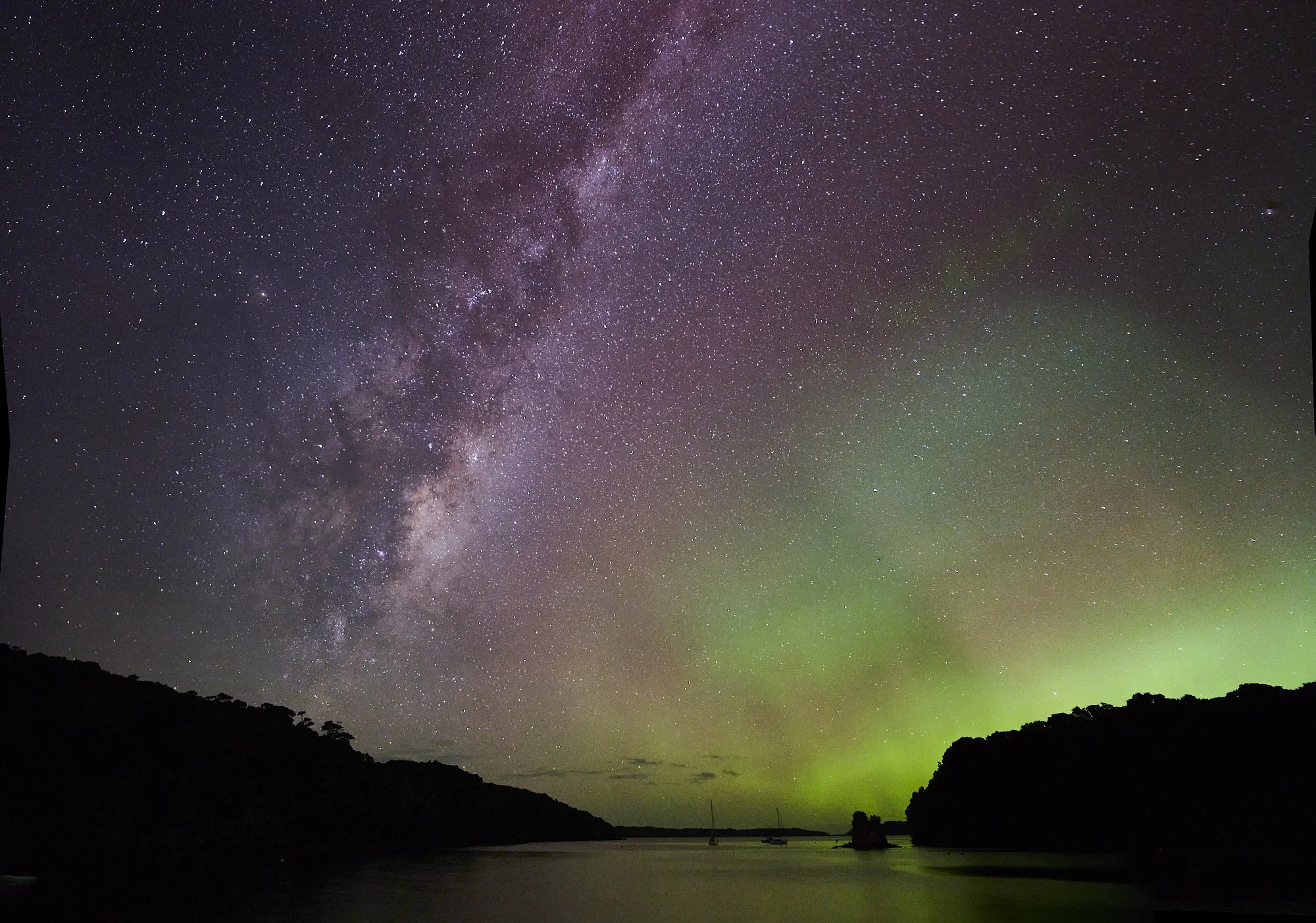
Aurora Australis, Milky Way- Stewart Island © Helen Darling
I shared my first aurora with a group of strangers, high the hills of Central Otago, away from light pollution. The spectacle was humbling and uniting – strangers enjoying a natural phenomenon that, for a short time, distracted us all from every day. Since then I have been hooked on the Aurora and moving to Rakiura / Stewart Island is a dream for anyone interested in the night sky. But first, what is the Aurora Australis?
The Aurora Australis
Aurora occur when charged protons and electrons hit the magnetic field of a planet. The charged protons and electrons come from our sun - released in waves and most dramatically when there is a solar flare or coronial mass ejection. When these charged particles collide with atoms in our atmosphere they emit light (the gorgeous greens, reds and purples you see in aurora photos). The colour is determined by where in the atmosphere the particles hit.
Like the Aurora Borealis (the Northern Lights) the Aurora Australis is seen best around the South Pole (or Stewart Island if you can’t travel that far!). Earth’s magnetic field funnels the solar particles towards the North and South Pole. Unlike the Aurora Borealis which is visible from many populated areas, the Southern Lights are less accessible.
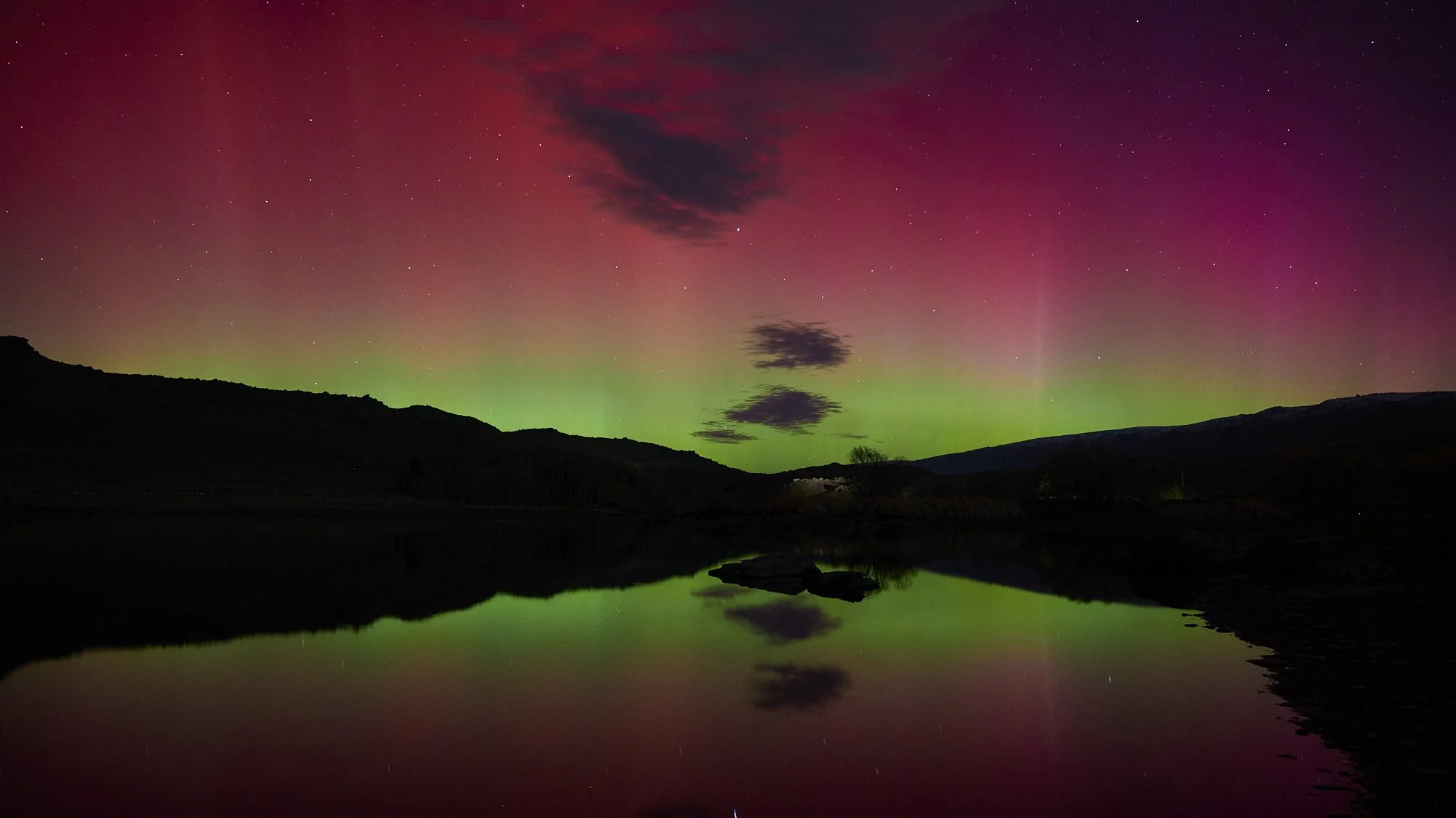
Aurora Australis, Central Otago © Helen Darling
Best Places to See the Southern Lights
· Southern New Zealand – particularly Stewart Island, Southland and parts of Otago
· Tasmania Australia
· Southern Chile and Argentina.
When Is the Best Time to See Them?
After dark! Which is why the winter months (longer hours of darkness) are better. That being said, there is no guarantee that an aurora will happen as a number of things have to line up – solar activity, minimal moonlight, clear skies; if these are all present then the best place to see them is somewhere southern and facing south (and as far away from light pollution as you can get).
Do I need a camera to see the aurora?
The images we see plastered across social media have all been taken by some sort of camera – a camera is able to pick up the lights that we can’t necessarily see with our naked eye. A smartphone camera will produce great aurora photographs if you are able to hold it still and have a longer exposure. Often you can see the light but not necessarily the colour of the aurora (it does depend a lot on how strong the aurora is).
Tips for Viewing
Get away from city lights: Darkness is essential.
Look south: a bit obvious but it does catch some people out!
Check aurora forecasts: Apps and websites track solar activity.
Be patient: Auroras can be unpredictable.
Dress warmly: Especially important in southern regions where temperatures drop quickly at night.
Use a camera: Long-exposure photography can capture details not visible to the naked eye.
Be kind to other aurora watchers / photographers: where possible use minimal light to safely get to your aurora viewing spot, don’t point your torch at other people, use a red light if you can (but be aware that for photographers it is often difficult to edit the red light out).
Be safe. If you are out and about in the dark take precautions – a torch and warm gear, a cellphone or other form of connectivity.
Have fun!
Final thoughts
Rakiura Stewart Island is a Dark Sky Sanctuary which means that you enjoy incredible night skies with / without the aurora. We recommend heading out with the team at Twinkle Dark Sky tours for an evening to remember.
